

CASE STUDY

The Genesis of the Grand Arena: Moki Mayhem is the flagship title of the Grand Arena, a gaming ecosystem where outcomes are determined by how players train their AI Agents. As the Creative Director, Production Lead, and Environment Artist, I was tasked with building a high-fidelity, engaging experience that bridged the gap between Web3 technology and competitive gameplay.
BACK TO
JUMP TO
THE CHALLENGE
8,888 Problems: The core mission of Moki Mayhem was to build a game that AI agents could actually play. During Moku’s NFT launch, a collection of 8,888 unique Mokis was released. As a "tale as old as time,” we were trying to figure out how to make a full game in the shortest amount of time—and creating unique assets for 8,888 Mokis was no easy feat.
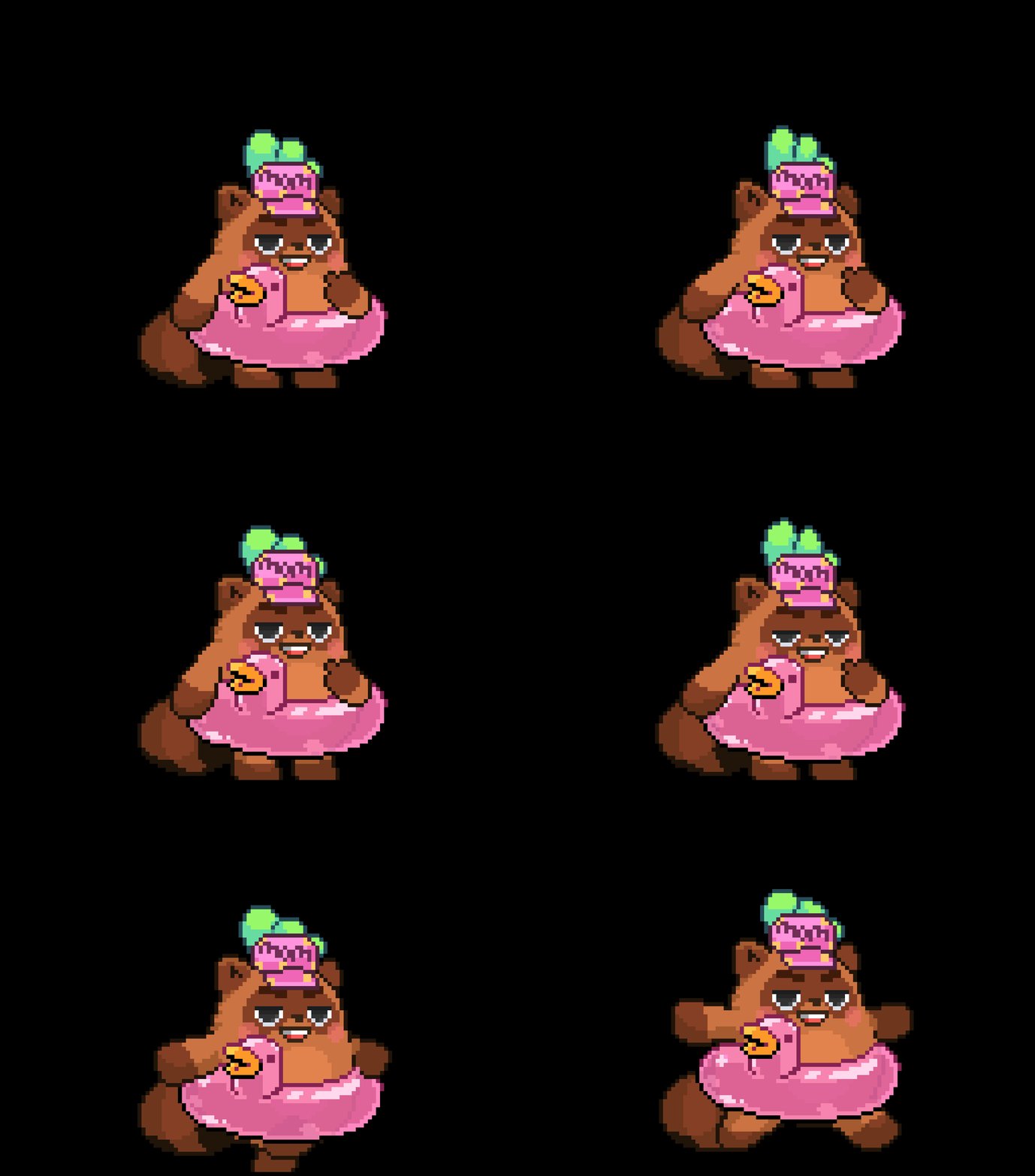
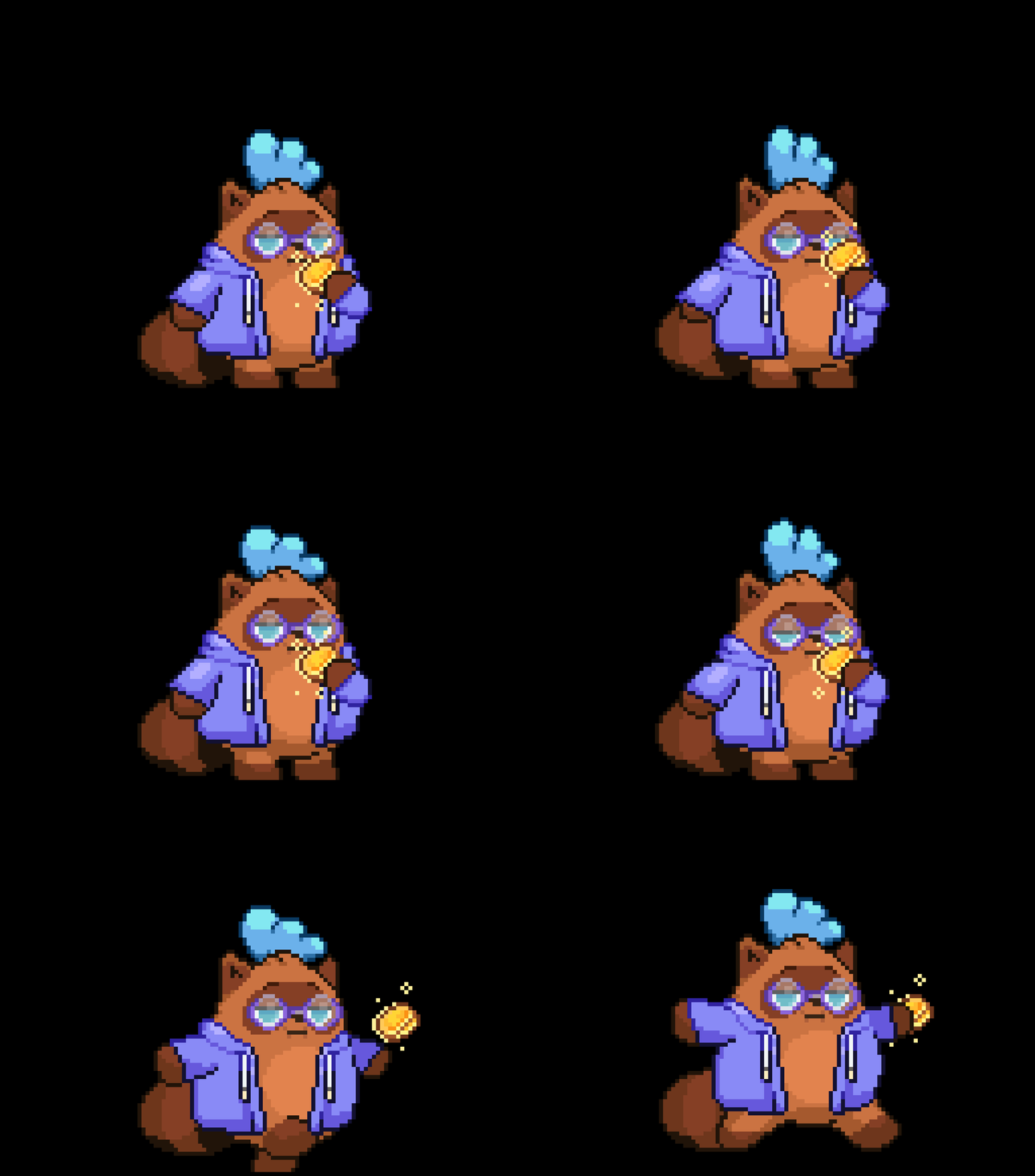
Luckily, the team had already created a library of Moki sprites for Pixels (the popular free-to-play, open-world farming MMO on the Ronin network). These existed as sprites with idle and running animations. However, we didn’t have the separate assets or "bare bodies" required to rebuild them within our game engine based on a unique Moki ID.
CREATIVE DIRECTION & GAMEPLAY
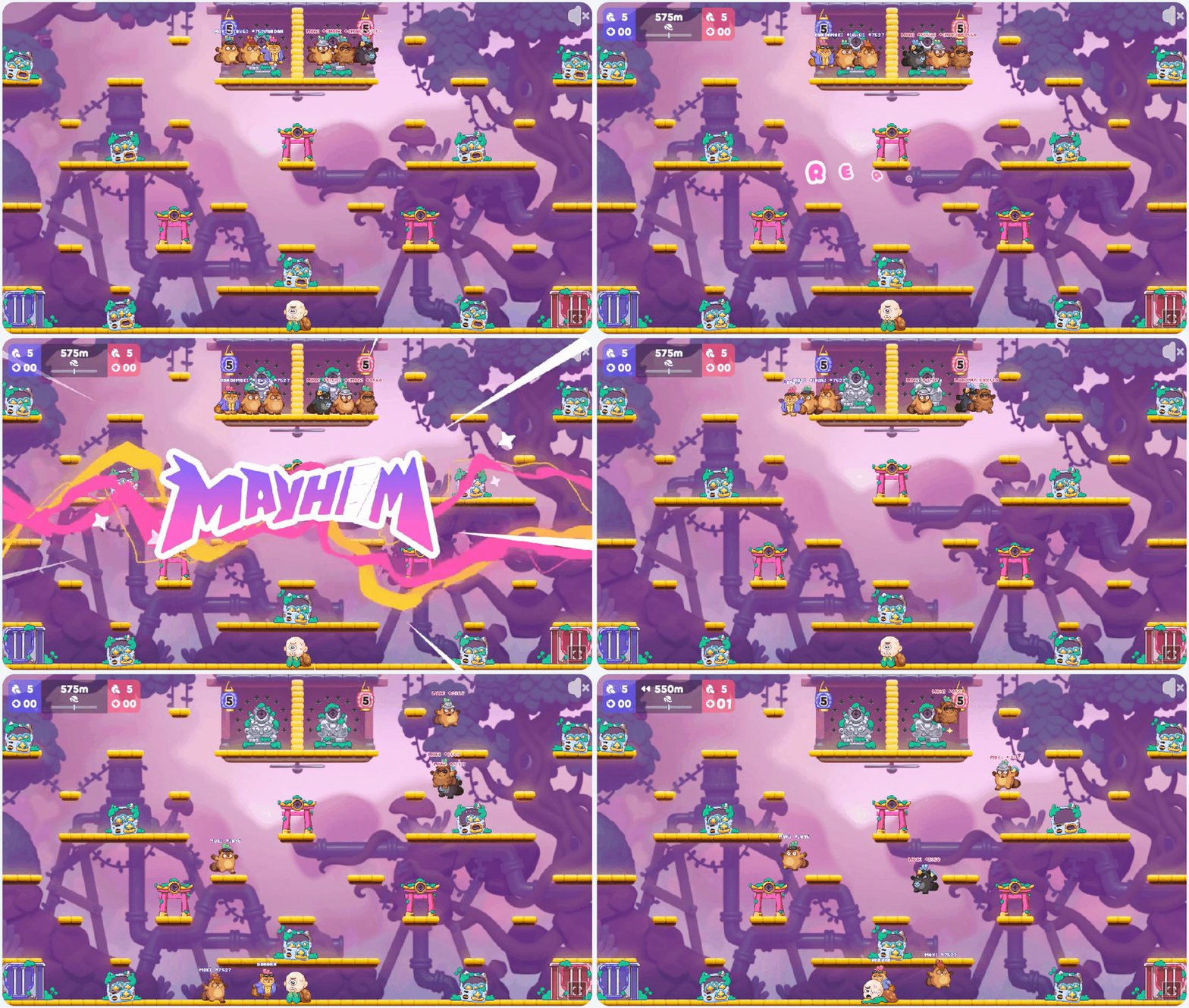
Our Head of Games, Jyro, brought his experience from working on Killer Queen, and landed on a platformer-style game with three ways to win: Economic, Tug-of-War, and Military. I was responsible for leading the creative vision on this. Beyond overseeing the schedule, production list, and art team, I wanted to push the boundaries of what a platform game could look like within our unique parameters.
CG MEETS PIXEL ART
While researching other platform games, I found that none of them really excited me visually. Additionally, we had a staffing constraint: we didn’t have many pixel artists. The team before me relied mostly on a contract artist, Pixel Cat, with the rest of the team doing clean-up on pixel assets.
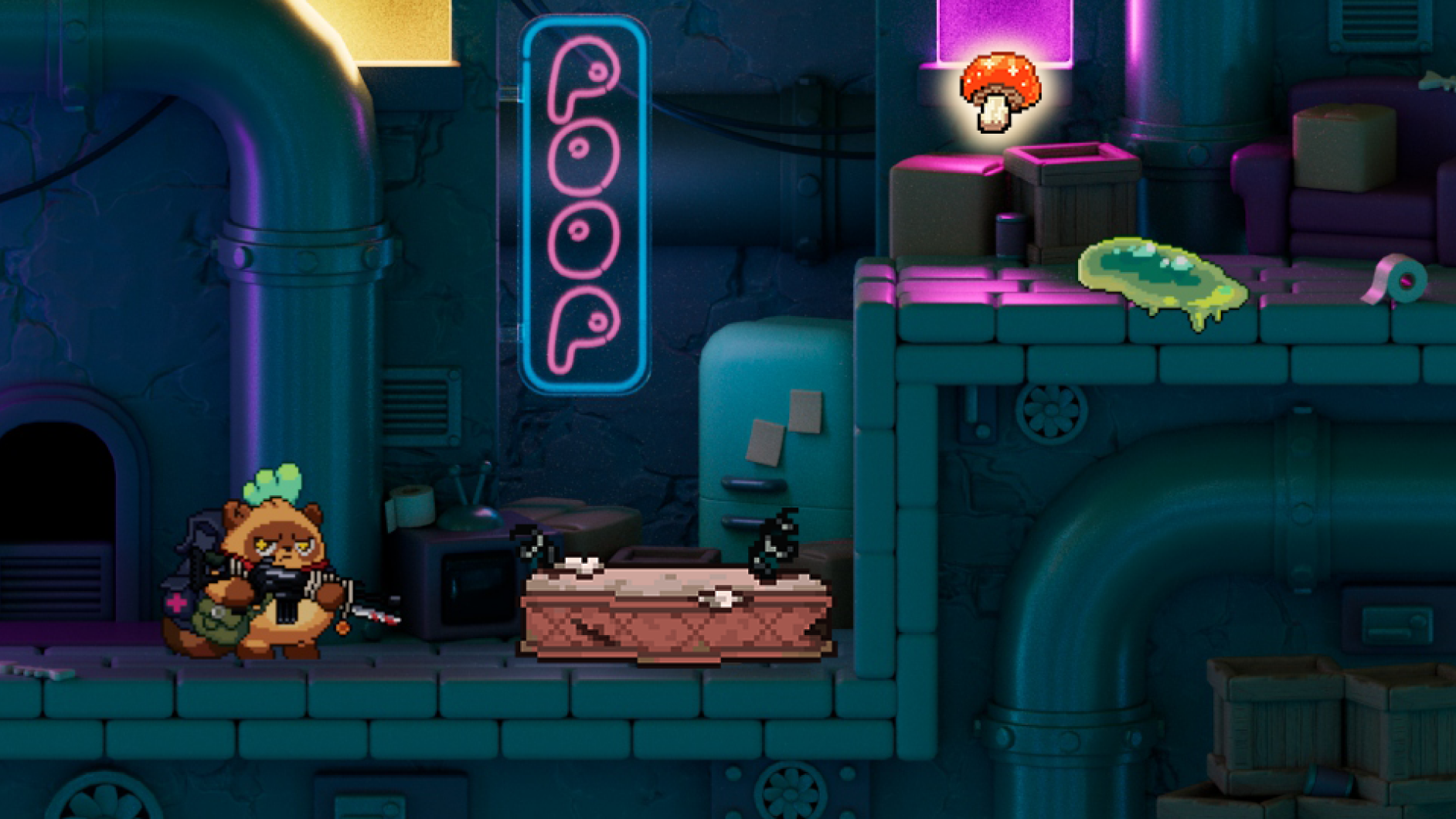
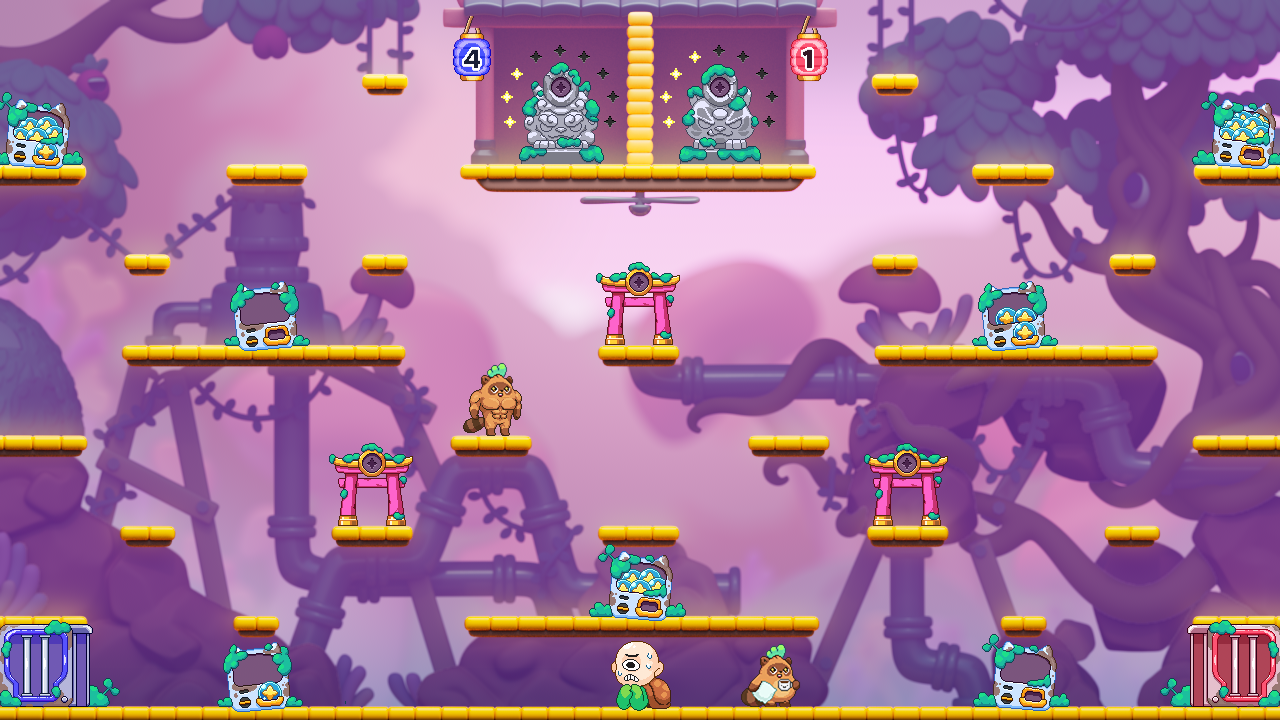
As a 3D Artist, I thought: What if we combined CG and Pixel Art? This combination created its own set of issues—mainly readability and ensuring users understood which characters could interact with the environment. When in doubt, I tested it out. I ran several tests with Pixel Art characters against CG backgrounds; the conclusion was that it felt EXCITING!
NARRATIVE & LORE
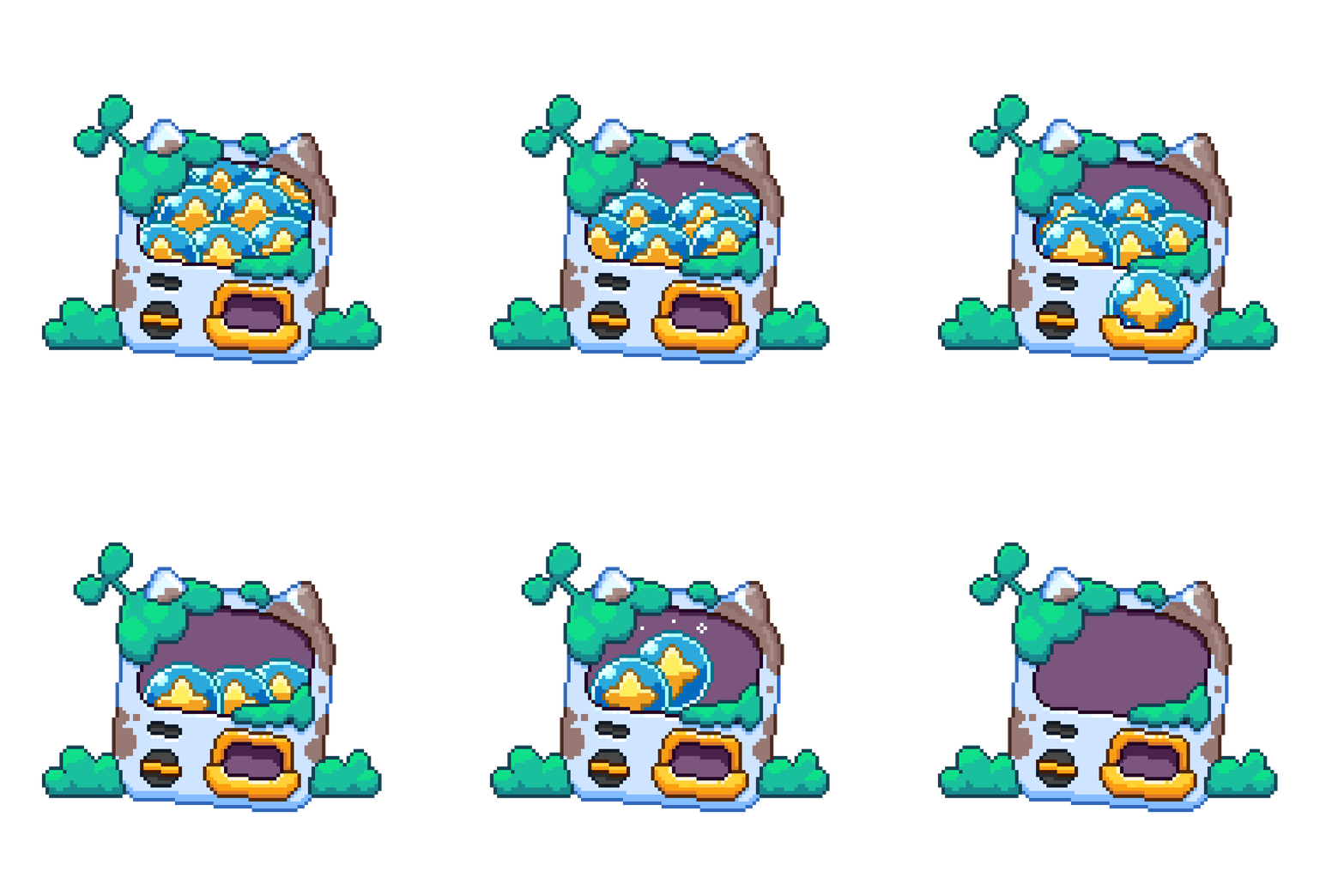
As Creative Director, I needed to shape the narrative of Moki Mayhem and define how it fit into the wider world of Moku and the Grand Arena. Based on existing lore and brainstorming with the team, we built a world where the "big baddy," Koban Factory, had taken hold of the land and was slowly draining its resources. We integrated our three win conditions directly into this story:
ECONOMIC WIN
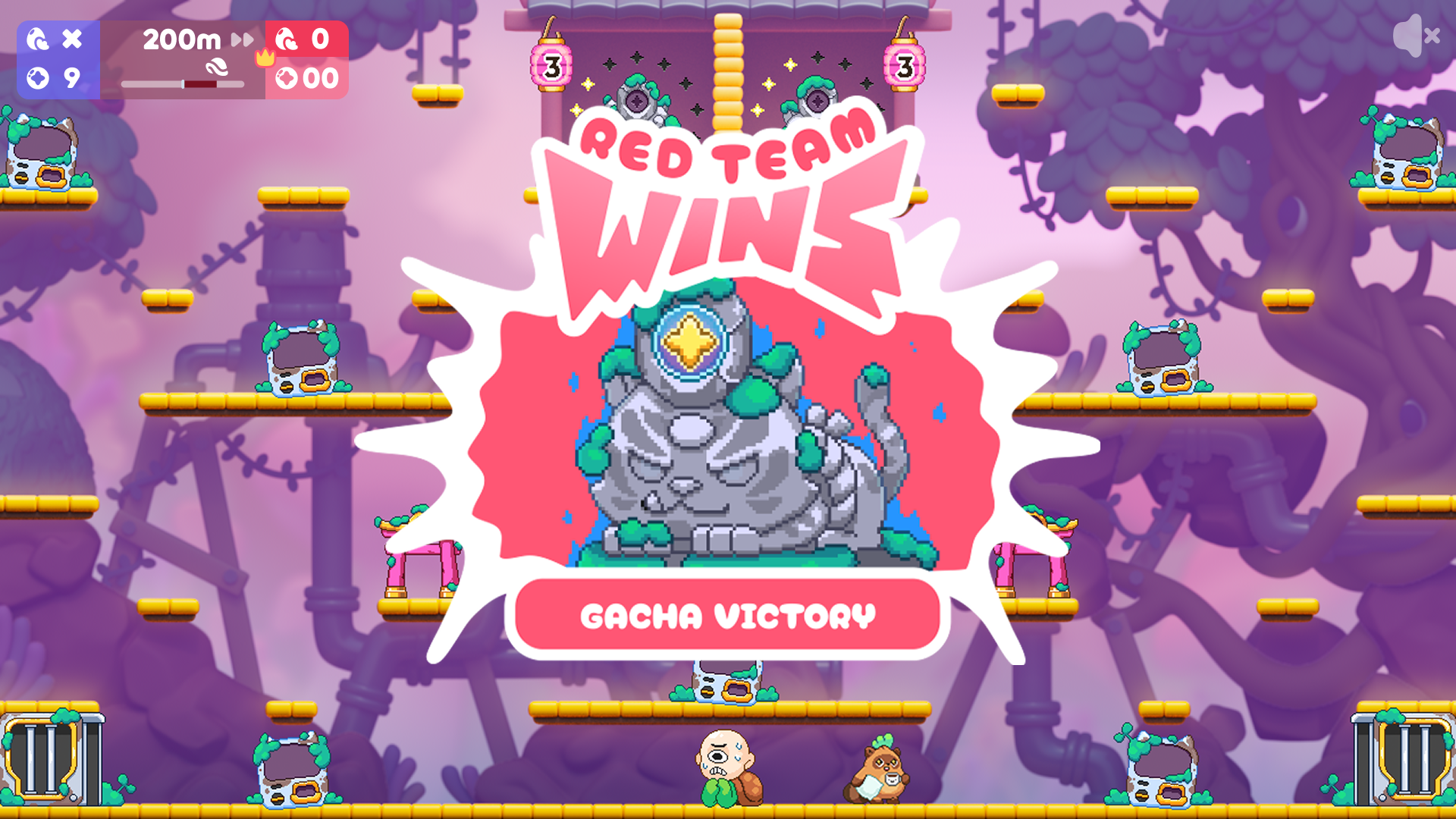
Gather Gacha Balls (a commoditized version of luck) and bring them to the Tamakin Statues.
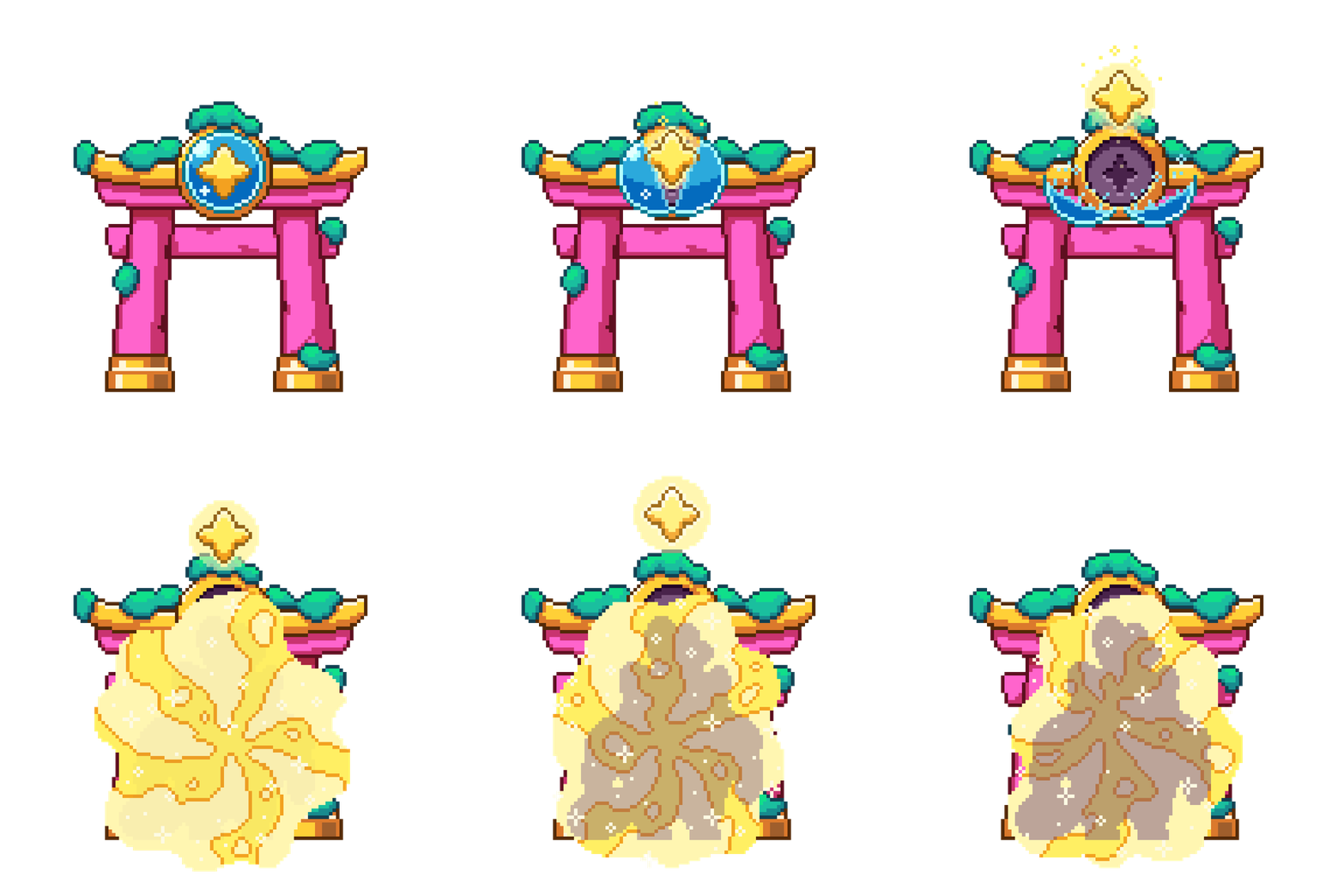
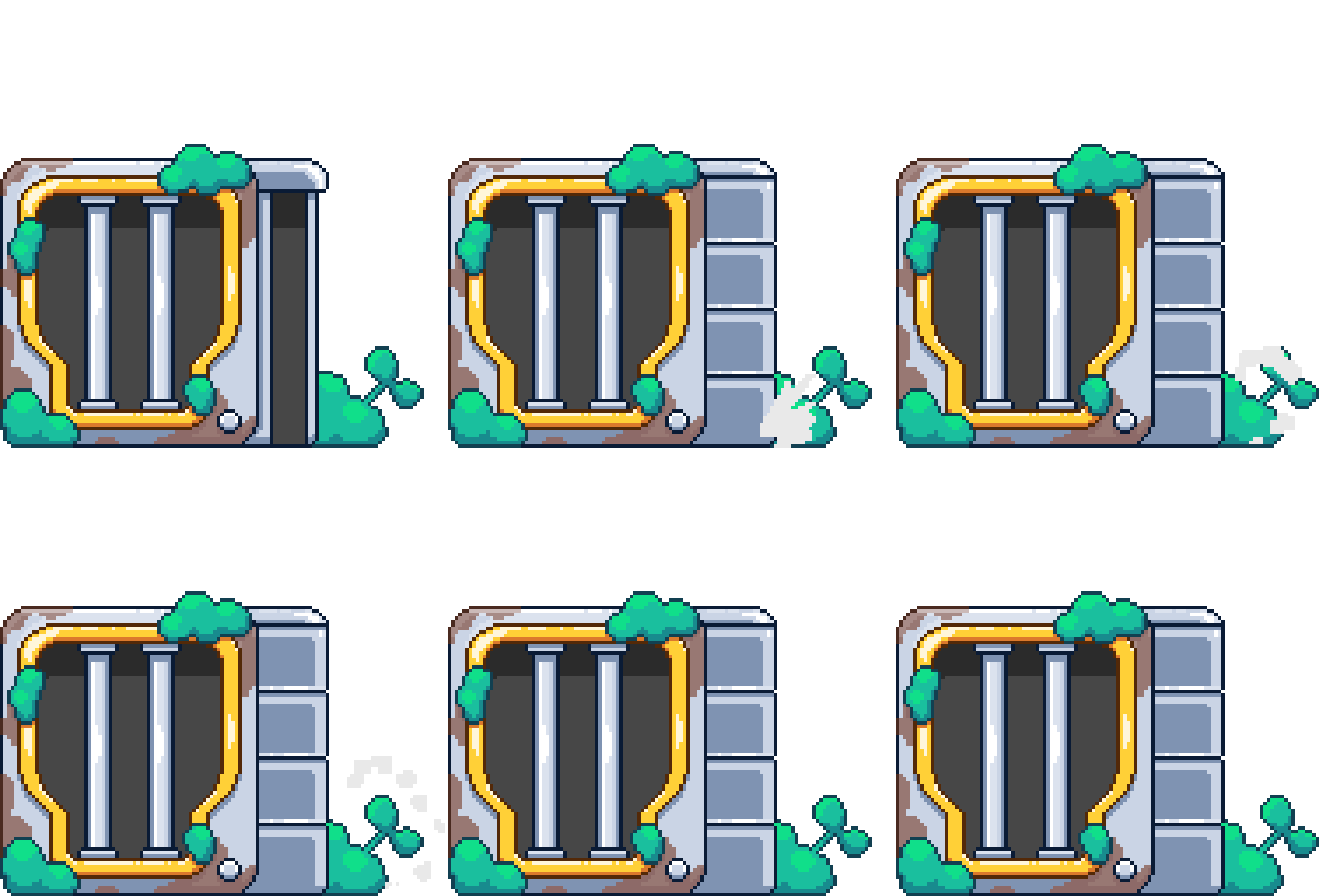
Bring Gacha Balls to a Torii Gate, which transforms you into a Buff Moki capable of knocking out opponents.
MILITARY WIN
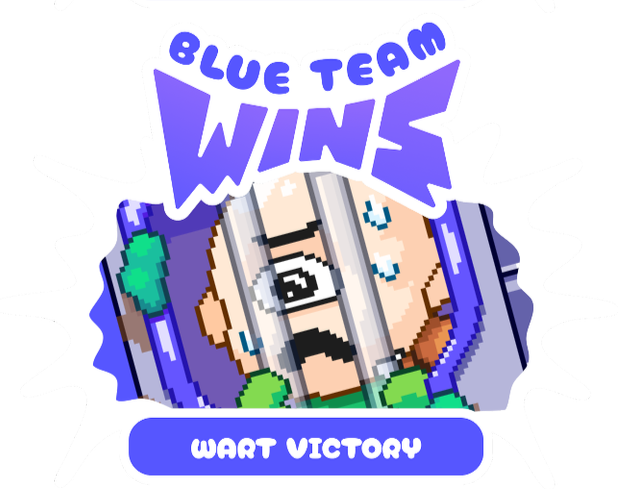
Ride Wart into a Koban Wart Trap (whose magic was being ground up to create the Gacha Balls).
WART WIN
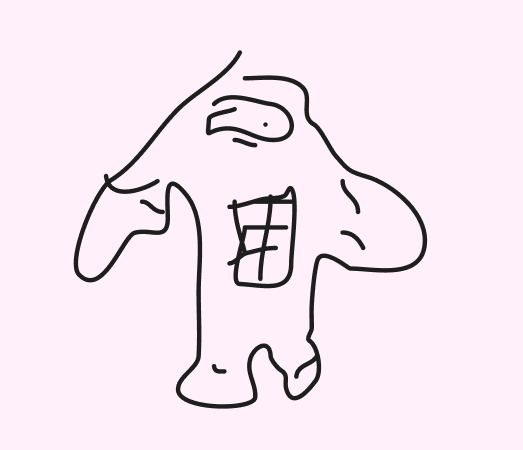
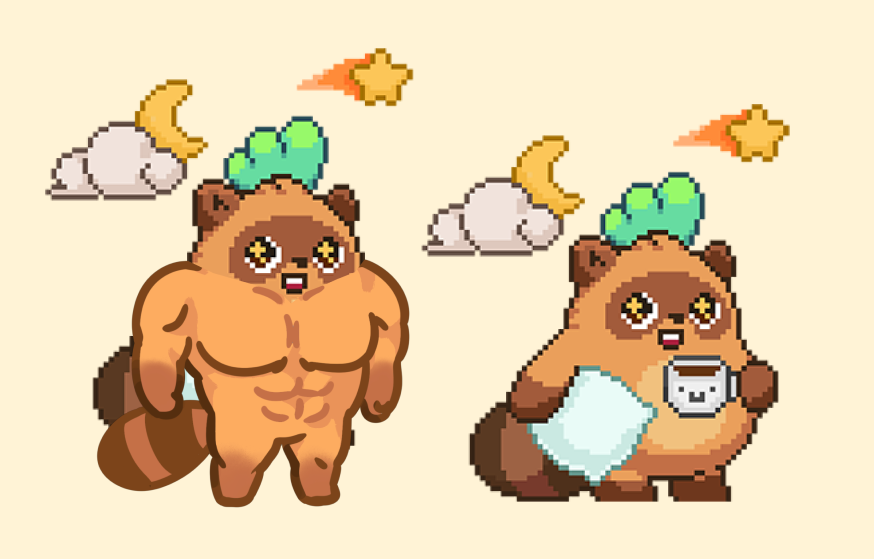
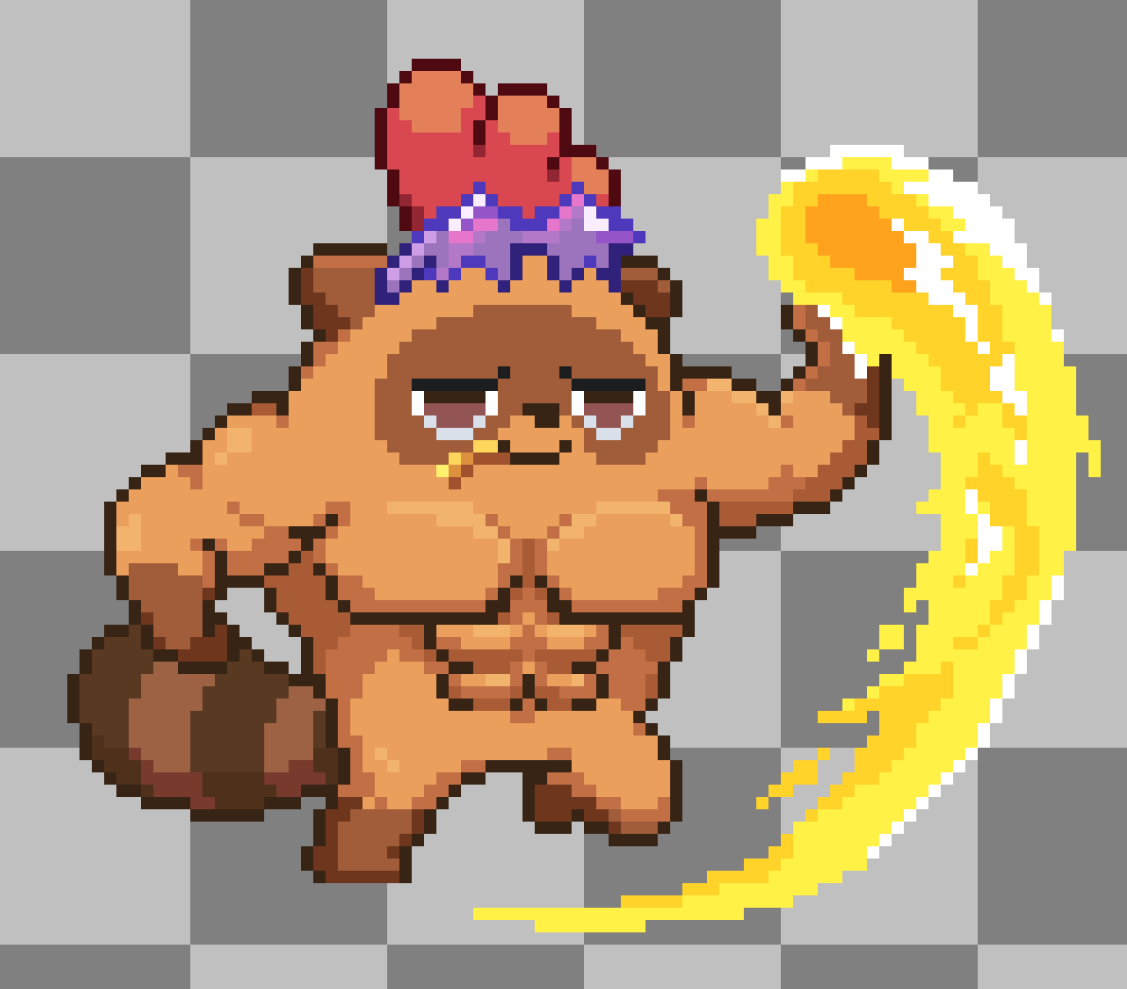
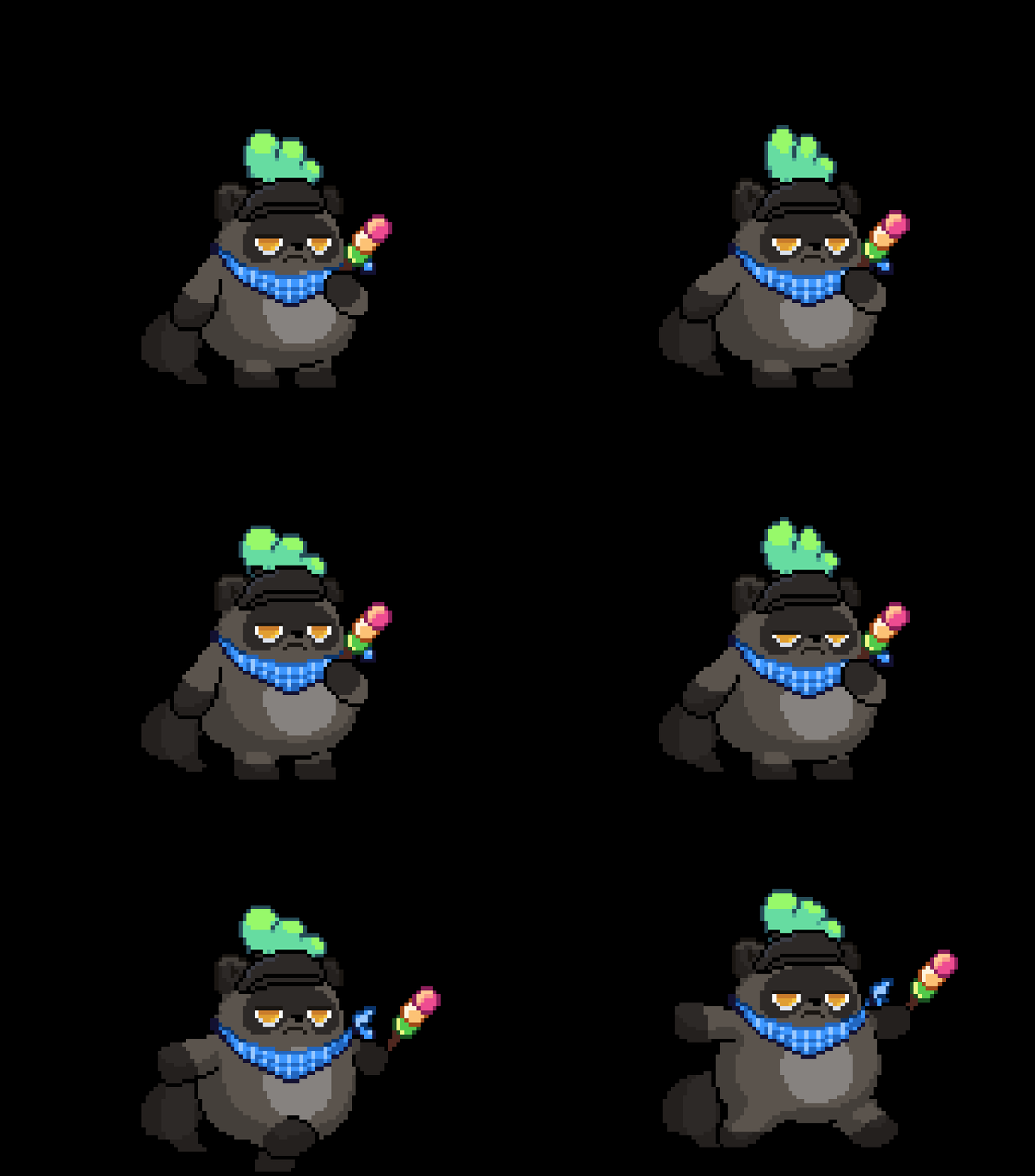
"Buff Moki" started as a joke. We asked, "What if we just stuck a buff body directly onto the sprites?" We cackled with laughter. However, knowing we had 8,888 Mokis, we realized that by making a single set of "Buff Moki" body sprites, we could solve the problem of having a transformed version for every character without making 8,888 individual assets. Huzzah!
PRODUCTION BREAKDOWN
Branding: We took the guardrails established for the Grand Arena and decided that each game would use a specific sub-combination of brand colors for its own unique identity. Rachel and I worked to develop the logos and branding. We landed on a logo that was instantly readable, fun, and competitive—it felt like Moku, but with a competitive edge.
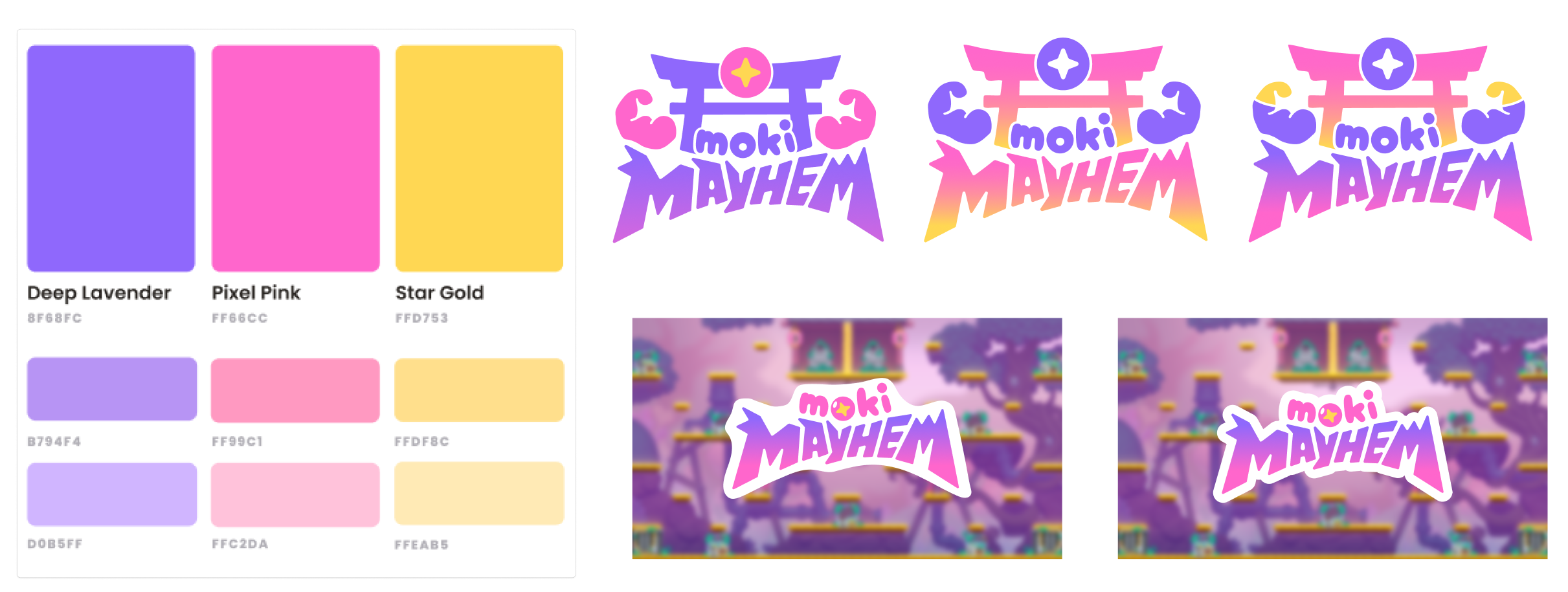
Illustrations by Rachel Yoon.
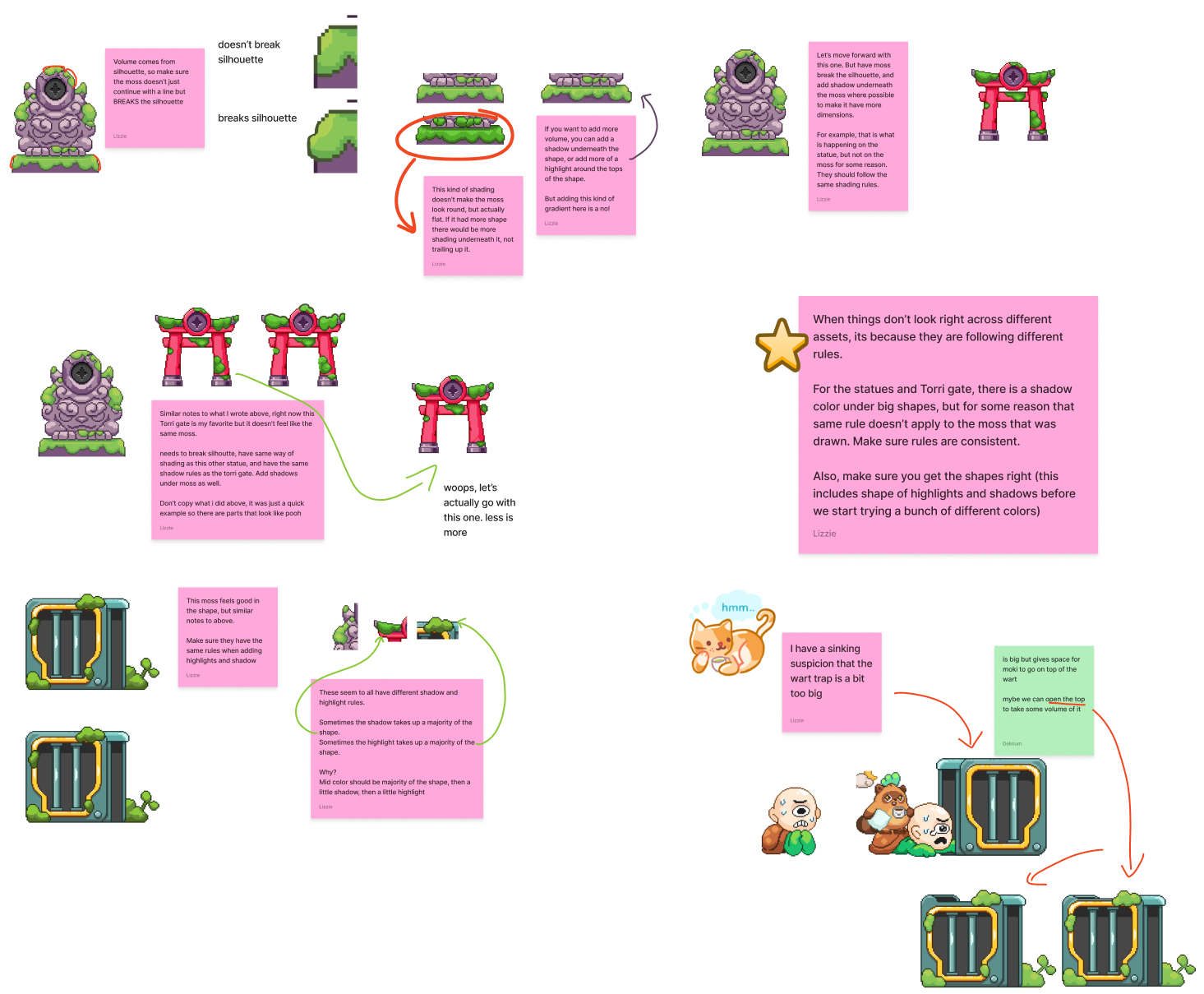
Pixel Assets: We had sprites of Mokis who could idle and jump, but we needed an attack in the form of Buff Moki. We also needed a multitude of separate Moki Accessories, along with interactive way points throughout the map. Since these were Pixel assets, they also required sprite sheets.
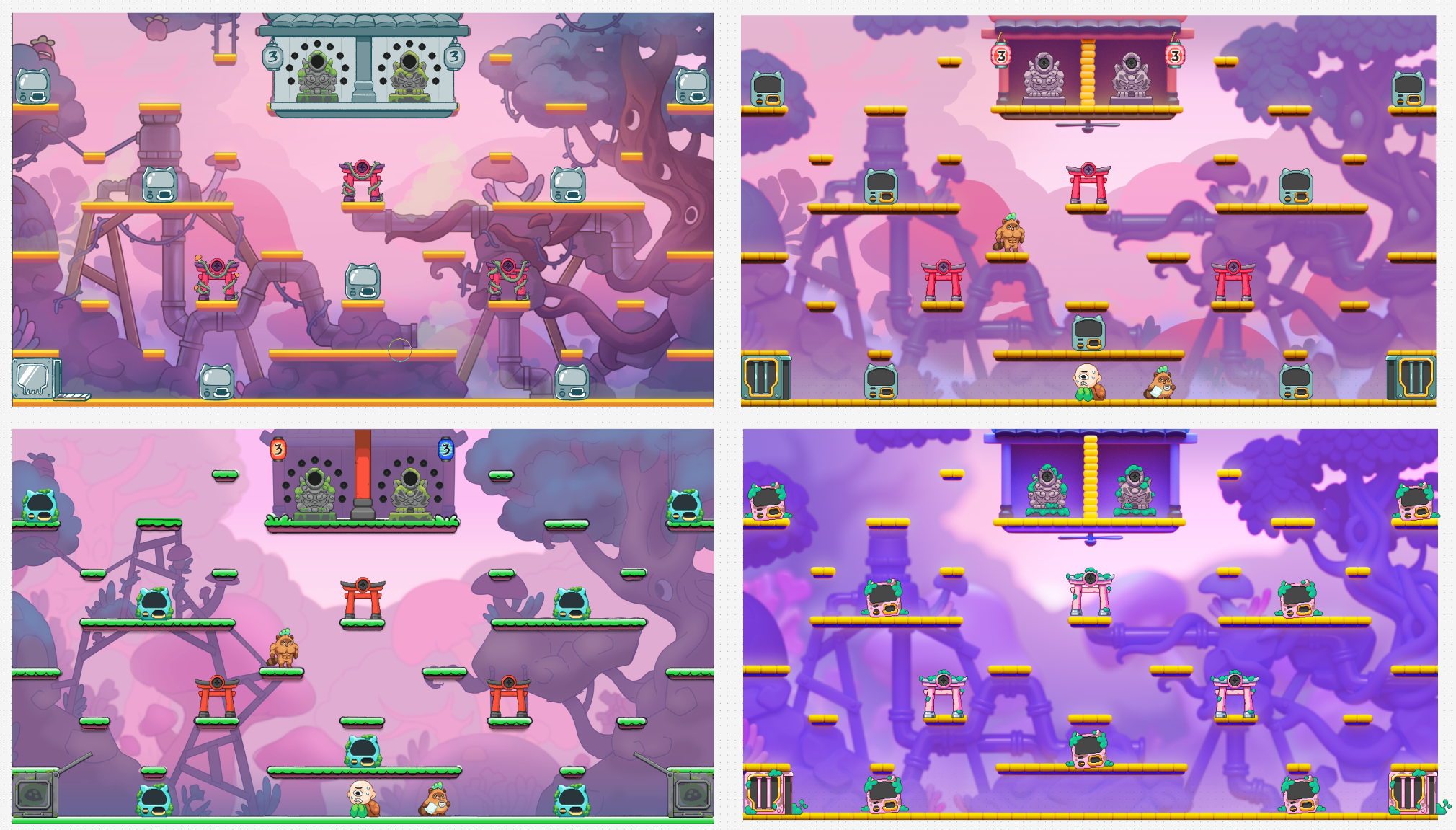
Backgrounds: After the initial tests, I knew the Pixel + CG combo was a hit. While assets Pixel assets were being built and backgrounnd was being designed, I did a lot of compositing and color grading to ensure that—separate from form—the game was easy to read and the user knew where to look.
I then jumped into the modeling! I did this through a series of live streams to share the process with our audience, giving them a glimpse into the team they were supporting.
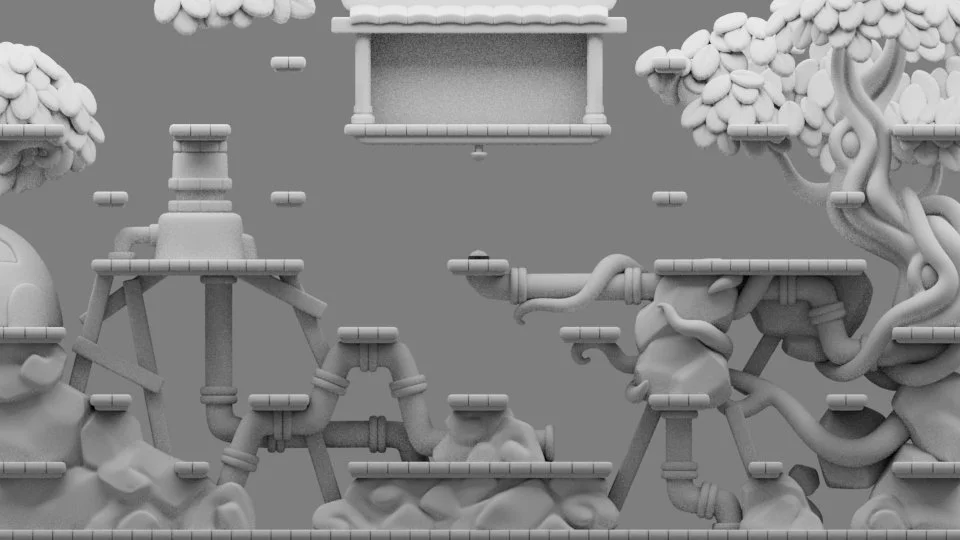
Modeling + Lighting WIP
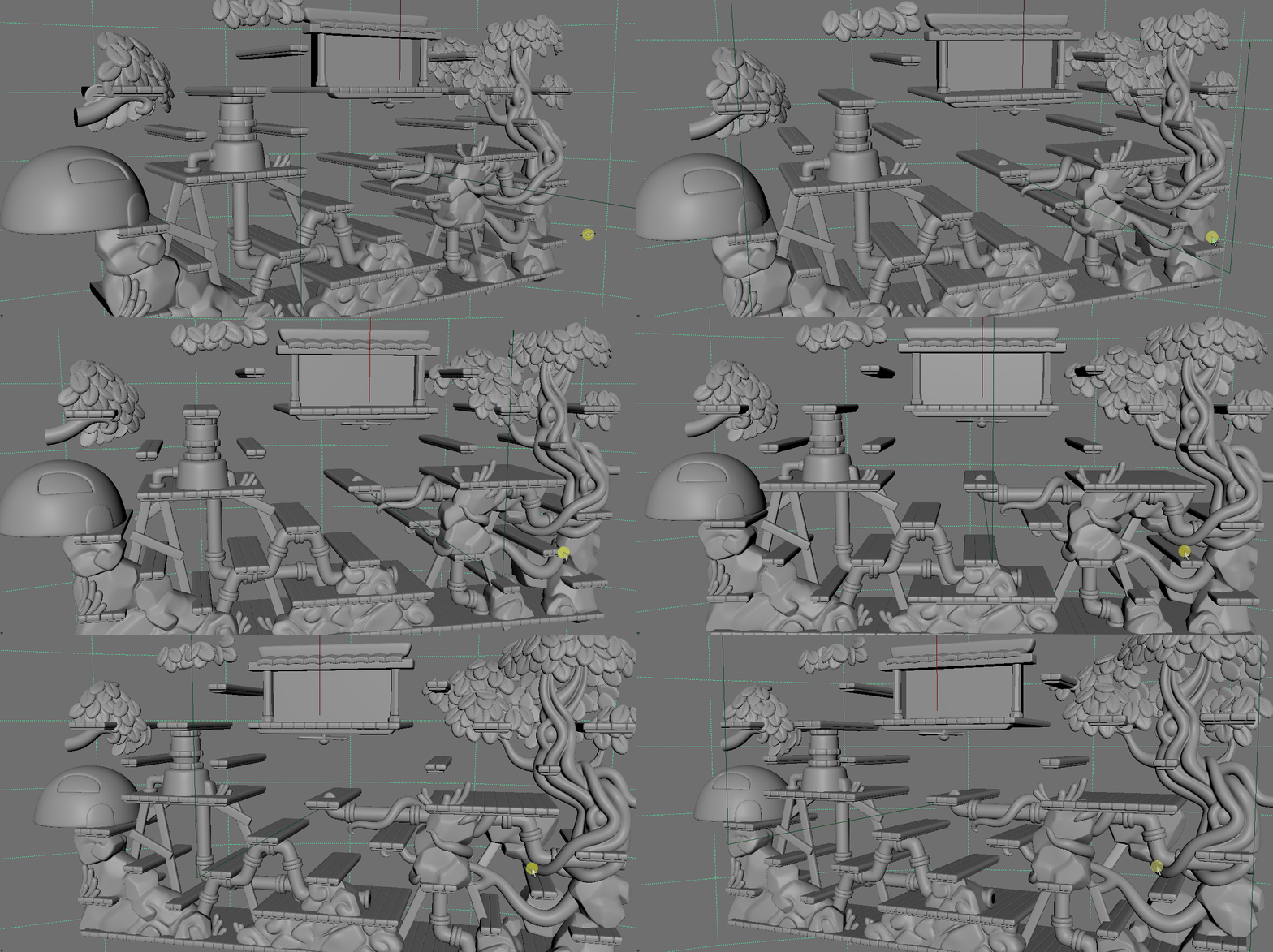
3D Scene tumble
GRAND ARENA
+
GRAND ARENA
+
GRAND ARENA
+
GRAND ARENA
+
GRAND ARENA
+
GRAND ARENA + GRAND ARENA + GRAND ARENA + GRAND ARENA + GRAND ARENA +
UI ELEMENTS
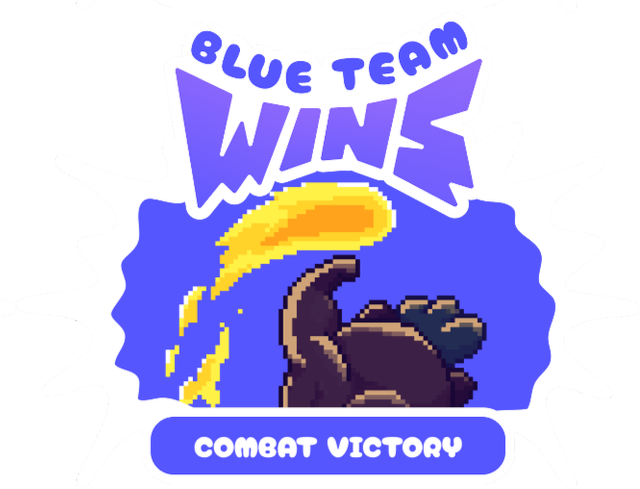
Finally, we needed a starting screen, victory screen, and status bars. Cathy created the starting and ending animations, all of which called back to our primary branding and logo. We also designed UI explorations to show the progress of each win type, so users knew exactly how close each team was to victory.
THE RESULT
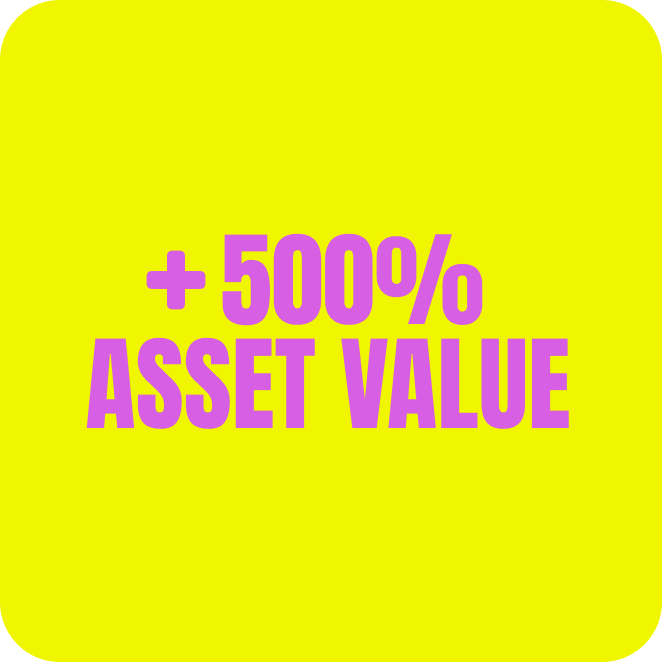
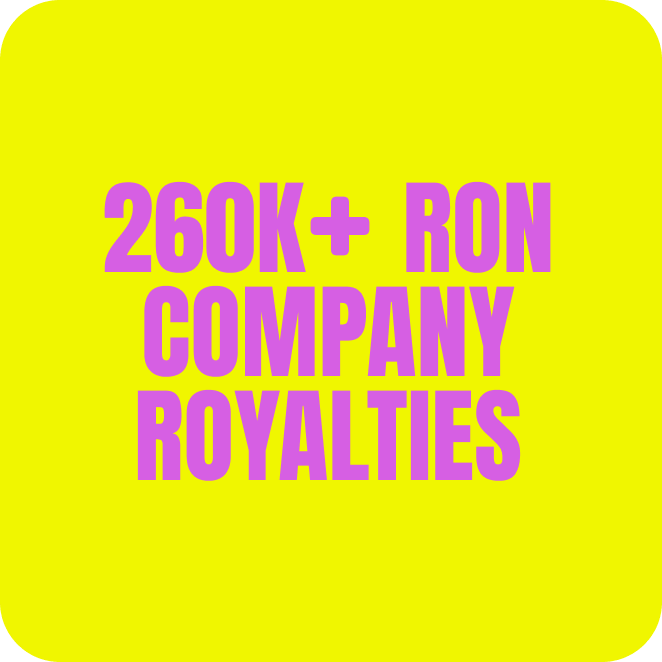
The release of Moki Mayhem was a huge success, rounding out a major pillar of the Grand Arena. I was fortunate to work with the incredible Games, AI, and Marketing teams at Moku to ensure our efforts were synchronized. It was extra special to create so openly with our community, leaving them feeling deeply connected to both the game and the team. By synchronizing Moki Mayhem with the Grand Arena Trading Cards, we transformed our digital assets from standalone collectibles into a high-utility economy.
$135
$55


MOKI GENESIS
(ORIGINAL NFT COLLECTION)
Value Growth: Floor price rose from 250 RON to 1,500+ RON ($55 $ to $135+ USD).

Community Retention: Listing rate plummeted to 1.4% as owners transitioned to long-term players.
GRAND ARENA TRADING CARDS (UTILITY)
Market Liquidity: Achieved 3.25M RON (~$740k USD) in total secondary trading volume.
Passive Revenue: Generated 260,000+ RON in company royalties through a scalable card economy.